

What Is the Best LED Reverse Light Bulb?
If you’ve ever backed up into a dark driveway, job site, or trailhead and thought, “I can’t see a damn thing,” you’re not alone. Factory halogen reverse lights are notoriously weak. The good news is that upgrading to LED reverse light bulbs can dramatically improve visibility, safety, and even your backup camera performance.
But here’s the problem: not all LED reverse bulbs are created equal.
Some are bright on paper but scatter light everywhere. Others are engineered to actually put light where you need it. In this guide, we’re breaking down the best LED reverse light bulbs on the market—including top options from GTR Lighting and Morimoto—so you can make the right choice for your vehicle.
What Makes a Great LED Reverse Light Bulb?
Before we jump into the list, let’s quickly cover what actually matters:
- Usable brightness (not just lumen claims)
- Beam pattern (focused vs. scattered light)
- Optics (projector-style vs. generic LED chips)
- Reliability and heat management
- CANBUS compatibility (no flickering or errors)
The biggest mistake people make is chasing the highest lumen number instead of choosing a bulb with a proper beam pattern.
Best Balanced Option: GTR Lighting Ultra Series
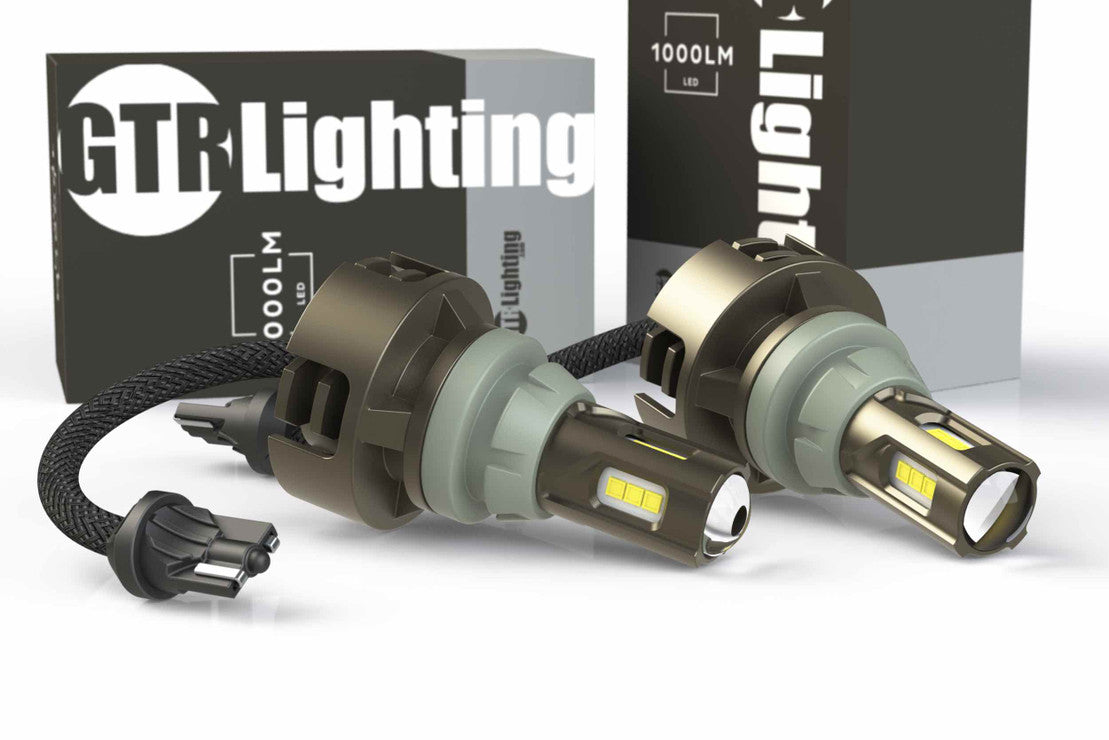
The GTR Lighting Ultra Series 921 LED is one of the most proven options on the market.
It strikes a near-perfect balance between output, beam control, and compatibility, making it a go-to recommendation for most vehicles.
Key Benefits:
- Multi-directional output with integrated optics
- Consistent beam pattern with fewer dark spots
- Reliable long-term performance
- Works well across a wide range of housings
If you want a safe, proven upgrade that just works, the Ultra Series is hard to beat.
Brightest Option: GTR Lighting Carbide 2.0

If your goal is simple—maximum brightness—the GTR Lighting Carbide 2.0 LED Reverse Bulbs delivers.
This bulb is built for raw output, making it ideal for trucks, SUVs, and anyone relying heavily on a backup camera.
Key Benefits:
- Extremely high lumen output
- Built-in CANBUS compatibility
- Great for lighting up large areas behind the vehicle
Trade-Off:
- Less beam control compared to projector-style options
Perfect if you want your reverse lights to feel like mini flood lights.
Comparison: Which One Should You Choose?
| Bulb | Best For | Beam Pattern | Brightness |
|---|---|---|---|
| Morimoto XB | Best overall | Projector / focused | ★★★★★ |
| GTR Ultra Series | Balanced performance | Controlled multi-directional | ★★★★★+ |
| GTR Carbide 2.0 | Maximum brightness | Flood | ★★★★☆ |
| OXILAM | Budget upgrade | 360° scatter | ★★★☆☆ |
| Auxbeam | Mid-range option | Mixed | ★★★★☆ |
Final Thoughts: What Is the Best LED Reverse Light Bulb?
The answer depends on what you value most:
- Want the best overall performance? → Go with the Morimoto XB
- Want a maximum brightness? → Choose GTR Ultra Series
- Want proven, well-rounded option? → Pick GTR Carbide 2.0
- On a budget? → OXILAM gets the job done
At the end of the day, the best LED reverse light bulb isn’t just about brightness, it’s about how that light is used.
Want More Lighting Upgrades?
Be sure to like and subscribe to our YouTube Channel for the latest upgrades for your vehicle. Also, don’t forget to check out HeadlightRevolution.com for the best automotive lighting products on the market.
Up Next:
2020 Ford Super Duty LED Bulb Shootout: Which One Is Actually the Brightest?
Meet the Experts Behind Headlight Revolution

Chris Nelson – Founder
Before founding Headlight Revolution in 2011, Chris worked as an automotive install technician specializing in lighting, sound systems, and engine performance parts. He has personally tested thousands of lighting products and works directly with lighting engineers to evaluate the technical performance behind every recommendation.

Josh Beberg – Content Production Manager
Josh leads hands-on testing and content production at Headlight Revolution. From beam pattern comparisons to real-world installations, he works directly with lighting engineers to ensure every review is grounded in measured results, not marketing specs.


